.png)
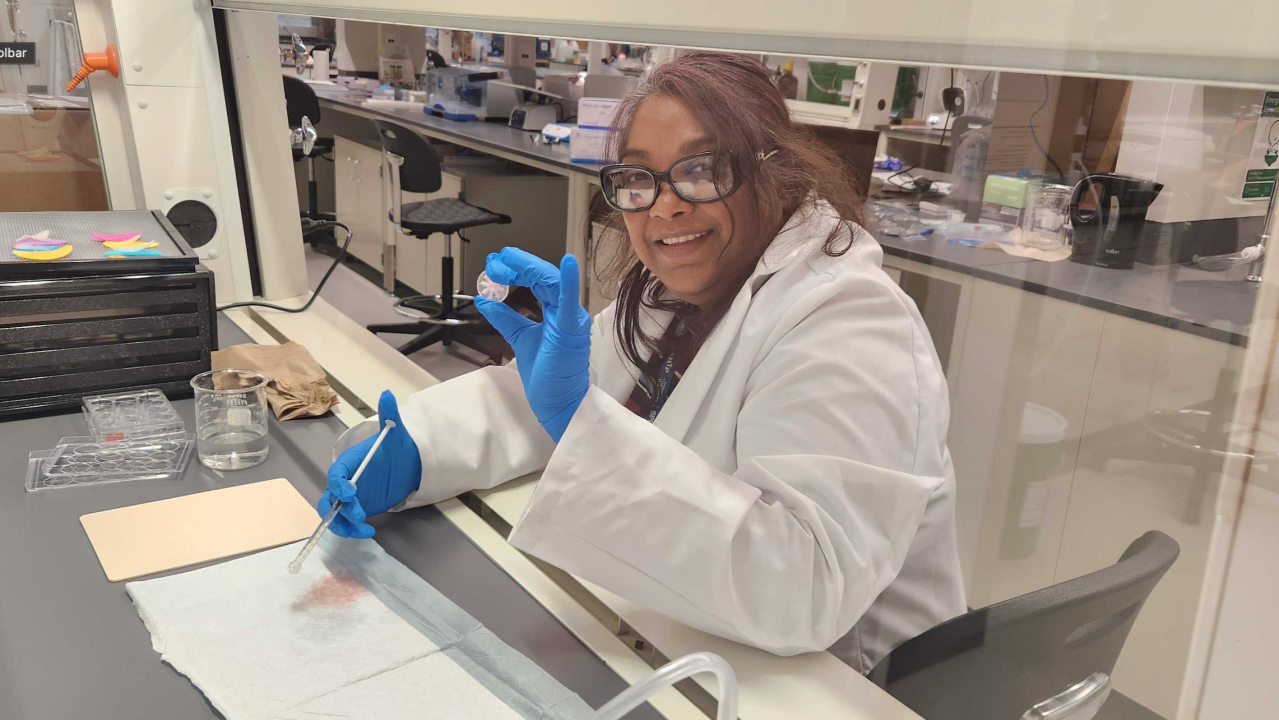
Dr. Latchmi Raghunanan's mission to develop better hormone delivery systems didn't begin during her PhD or postdoctoral work in renewable and soft matter materials, or even afterwards, when she worked in the biomedical startup space. It began during her own fertility treatment cycle.
The current standard of IVF care requires patients to self-administer daily injections throughout a weeks-long treatment period. This process can be painful and burdensome for patients, and if performed incorrectly, can compromise the entire expensive treatment cycle. Dr. Raghunanan's own experience was challenging; she was uncomfortable self-injecting and often required her husband to help. With her biomedical background, she didn't wish better drug delivery technology existed - she knew it already did, she wondered, "Why has this not come to fertility yet?" After months of frustration, she grew tired of waiting for a better solution, and Maman Biomedical was born.
Their solution? Two new IVF drug delivery devices: Port and Patch. Both devices leverage microneedle technology - arrays of ultra-tiny needles - to penetrate skin with minimal tissue disruption. Current IVF injections use larger-gauge hypodermal needles to reach deep into the subcutaneous tissue layer, which can trigger pain receptors and cause discomfort. In contrast, microneedles are much smaller in both length and diameter and deliver drugs into the shallower intradermal layer. By incorporating this technology into simple, user-friendly products, Maman Biomedical aims to help patients administer IVF medications more easily and comfortably from home.
Port will be their first device and is designed to work with the existing standard of care. It consists of an array of non-dissolving microneedles into which patients can inject drugs from a conventional syringe. Meanwhile, the longer-term project Patch uses an array of hormone-encapsulating microneedles that gradually dissolve, releasing drugs into the body. It will not only reduce the burden on patients to manually load the hormones each time, but it will also incorporate real-time hormonal tracking sensors, reducing the need for frequent clinical visits and blood testing.

Aside from ensuring the devices are biocompatible and easy to use, the challenge of bringing them to market is to demonstrate to regulators that intradermal administration will be equivalent to subcutaneous injections. Will the drugs enter the body at the same rate and concentration, and work comparably to the current standard of care? From Dr. Raghunanan's perspective, meeting this regulatory standard has been the main barrier preventing this kind of technology from reaching the market. Maman Biomedical is developing drug delivery devices - but not changing, or selling, the drugs themselves. Yet, the drugs themselves must be approved for intradermal use. "Now who wants to take that burden?" she posed. "The startup that's making this product? The drug company that has an established pipeline that everybody's already using and paying all this money for? They've got these huge profit margins - why disrupt that status quo?"
Once Dr. Raghunanan decided to take on the problem, she didn't wait. Within two weeks, she and her husband had incorporated the company, self-funded from their own savings, and started building - right off their kitchen countertop for the first eight months. "It's so hard," she recalled, "it's so hard building with nothing." Maman Biomedical was already at a disadvantage because they weren't a university spinout. University-based startups benefit from access to lab space, equipment, and early-stage funding during the critical 'de-risking' phase, which allows them to validate the technical feasibility of their product before seeking outside investment. Working entirely from home and personal funds, Dr. Raghunanan needed to make Maman Biomedical attractive to investors, quickly. That meant not only building credibility for their technology, but also for themselves as a business.
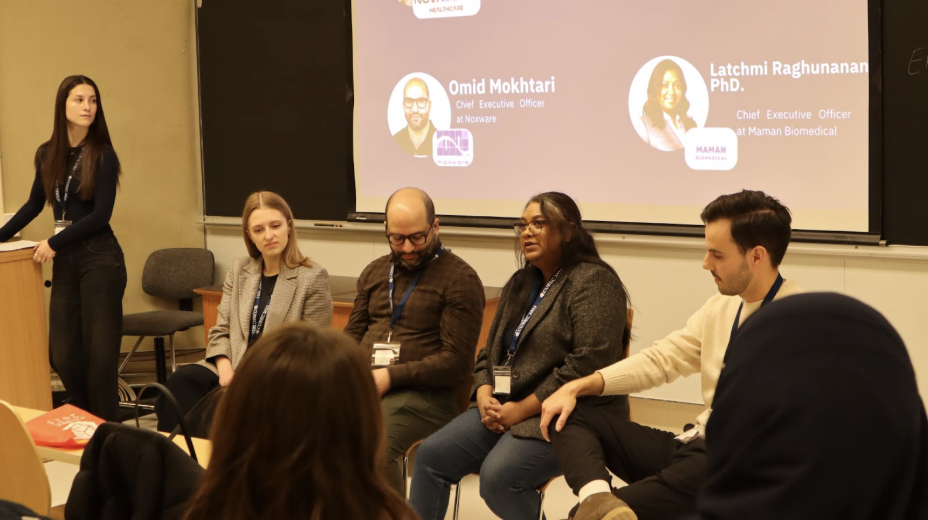
From the beginning, Dr. Raghunanan made community outreach a central strategy for growth. This meant saying yes to every opportunity, from interviews to conferences to pitch competitions, and spreading the mission of her company. She believed that "people invest in people", and the time she's invested in the community has come back around in unexpected ways. "Our very first cheque was through an introduction," she shared. "We didn't even have to sell him. By the time he met me, he was already sold."
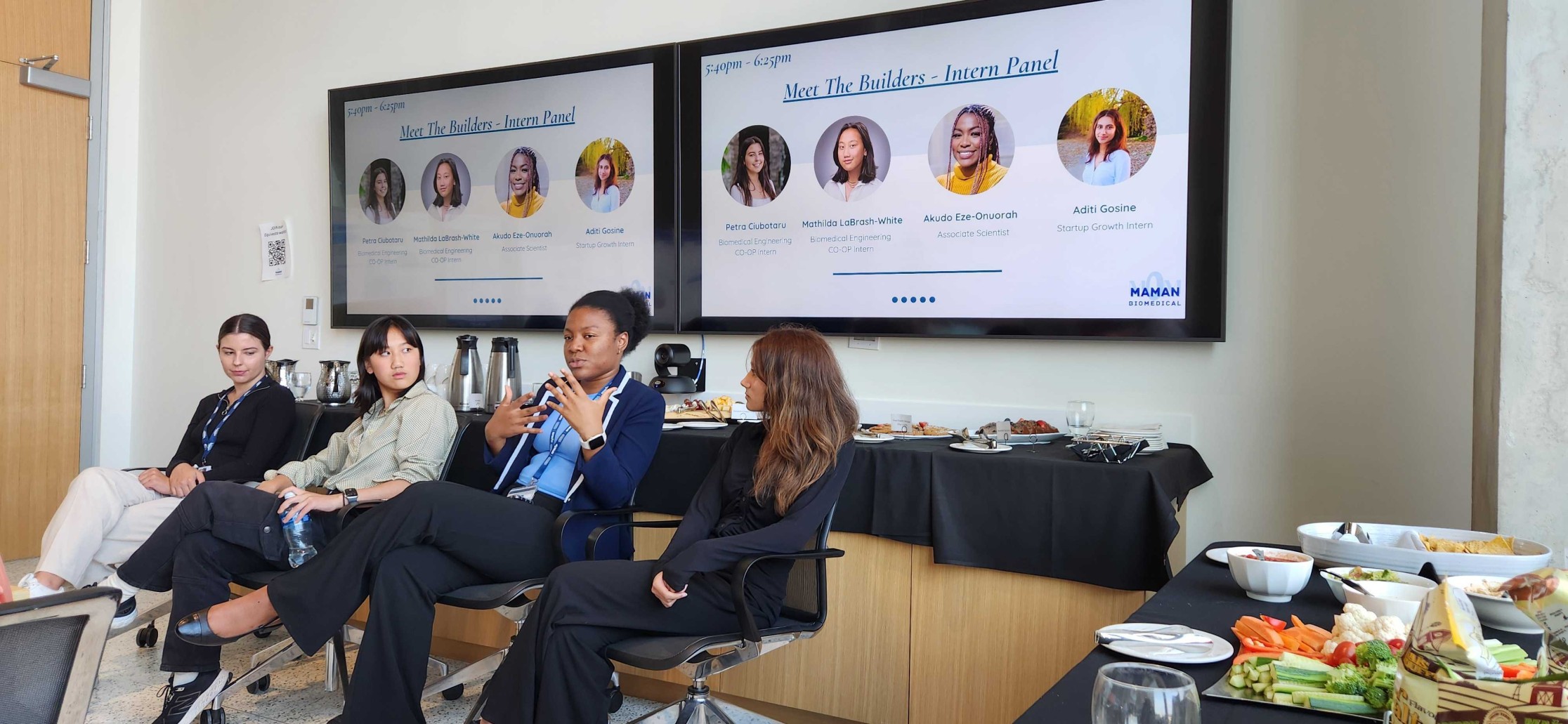
Meanwhile, building their team was partially a waiting game. Coming from a materials scientist background, Dr. Raghunanan needed someone with complementary biological expertise to join her team and hit the ground running. It wasn't until July 2025 that they could afford to bring such an expert on board. Dr. Raghunanan has also learned that when being paid below market value, the team members' personal alignment with the project goals really matters. Whenever that alignment occurs - for instance, with the four interns she brought on this summer - the team has accomplished remarkable things, with success on both sides.
Looking forward, Maman Biomedical will close its initial 'pre-seed' round of validation funding early this year, positioning the company to seek additional investment and begin moving towards commercialization. Port, which is expected to reach the market within two years, will undergo its first clinical trial in 2026. Their team is also working on the sensing component of their companion app, which they hope to launch in the near future. Maman Biomedical won't stop at IVF treatment either. Beyond Port and Patch for fertility medications, they plan to apply microneedle technology to transform Canadian hormonal healthcare more broadly.
As they move toward clinical trials and commercialization, the mission of Maman Biomedical remains clear: to make fertility care more accessible, less painful, and deeply patient-centered. Dr. Raghunanan's work stands as a reminder that biomedical innovation doesn't just come from technical expertise. It can grow out of lived experience, is driven by community, and is rooted in a refusal to accept 'the status quo' when better is possible.
Written by Alysha Kutuzyan, Editorial Writer, CUBEC
Feel free to check out:
Maman Biomedical's Website
Latchmi Raghunanan's LinkedIn